

- Subject:
The Spruce Pets – Methylene Blue
- Focus:
Search Generative Optimization (SGO)
- Service:
Entity Graph Engineering
- Date:
December 29, 2025
Reverse Engineering SGO Success
How does a legacy content site maintain dominance in the AI-first search era? By reverse-engineering this page, we uncover an “Authority-First” schema strategy that prioritizes trust over technical checklists.
1. The Challenge
The core question for legacy publishers is no longer “How do I rank #1?” but “How do I become the grounded source for AI Overviews?”. The Spruce Pets provides a masterclass in this transition.
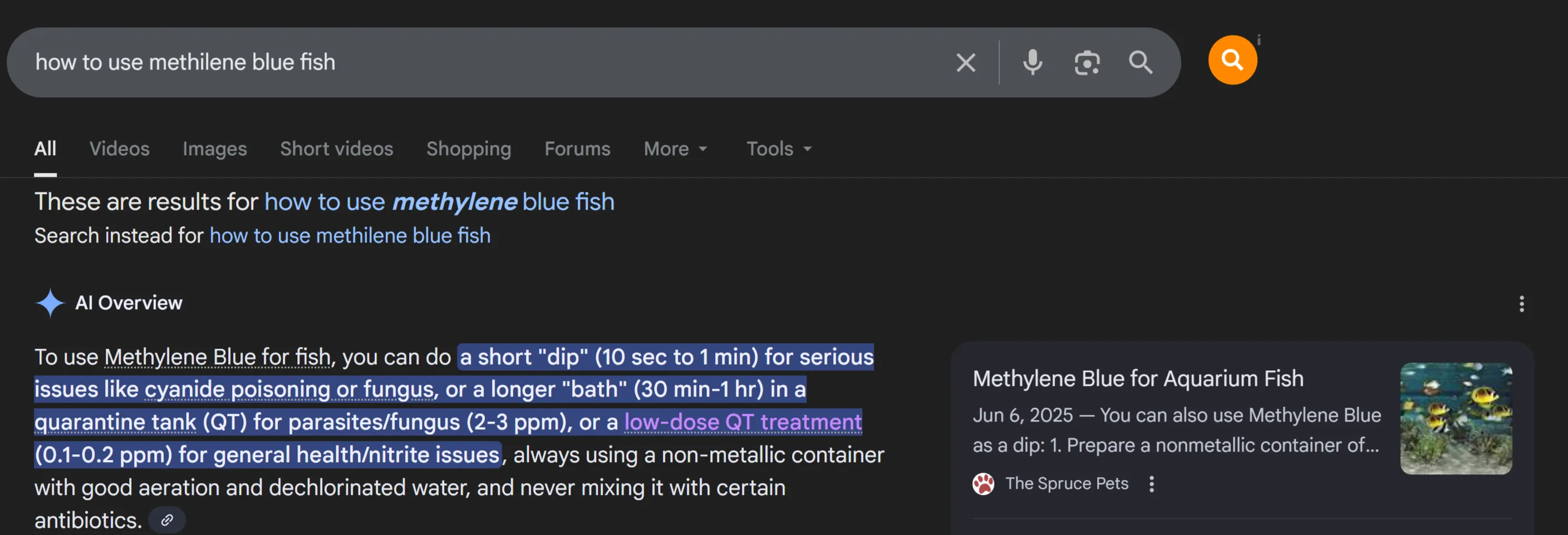
Fig 1.0: Real-world AI Overview extraction from indexed trust signals.
2. Methodology: The Reverse Engineering Process
To analyze this success, I performed a technical audit of the page’s structured data (JSON-LD) to identify hidden “Trust Signals” that Google’s AI prefers:
- Schema Extraction: Isolated the
application/ld+jsonblocks. - Entity Mapping: Identified how the site connects Content (
Article) to Expertise (Person) and Authority (MedicalWebPage). - Correlation: Looked at how AI Overviews extract steps even without explicit
HowToschema.
3. Key Findings: The “Why” Behind the Ranking
A. The “Reviewer” Moat (EEAT)
Spruce Pets uses a reviewedBy field to create a layer of verification that AI models crave.
- The Data: The schema points to Nick Saint-Erne, a Doctor of Veterinary Medicine (DVM).
- SGO Impact: Google’s AI avoids giving harmful medical advice. By linking to a verified DVM, the content passes the “Safety Filter,” making it eligible for the top AI Overview slot.
B. Semantic Contextualization
The content is dual-typed as Article AND MedicalWebPage.
- The Data:
@type: ["Article", "MedicalWebPage"]. - SGO Impact: This tells the AI precisely which “knowledge bucket” to place the information in, ensuring it shows up for high-intent queries like “how to treat fish fungus.”
C. Factual Grounding
The logic isn’t just “Trust us,” it’s “Trust the source.”
- The Data: Inclusion of a
citationfield linked to the University of Florida (EDU). - SGO Impact: AI models (like Gemini) value “Grounding.” Providing citable sources in the code helps the AI verify the facts before presenting them to the user.
- Replication Strategy:
The SGO Framework
The SGO Framework
Map Authority Entities
Don’t just list a writer. Add an Expert Reviewer to the schema via reviewedBy. Link authors to their social profiles to build an entity graph.
Define the Knowledge Bucket
Use specific schema types like MedicalWebPage or TechArticle instead of generic Article.
Ground the Content
Use the citation field within your JSON-LD to link to GOV, EDU, or peer-reviewed Research.